Methods for carbon dioxide removalEnhanced rock weathering (ERW)
About the method
Enhanced rock weathering (ERW) is based on a natural process: the gradual breakdown of minerals in rocks, which naturally binds carbon dioxide from the atmosphere. When rainwater comes into contact with silicate or carbonate rock, it reacts with the CO₂ in the air to form bicarbonates. These are compounds that remain stable over geological time scales (many thousands of years).
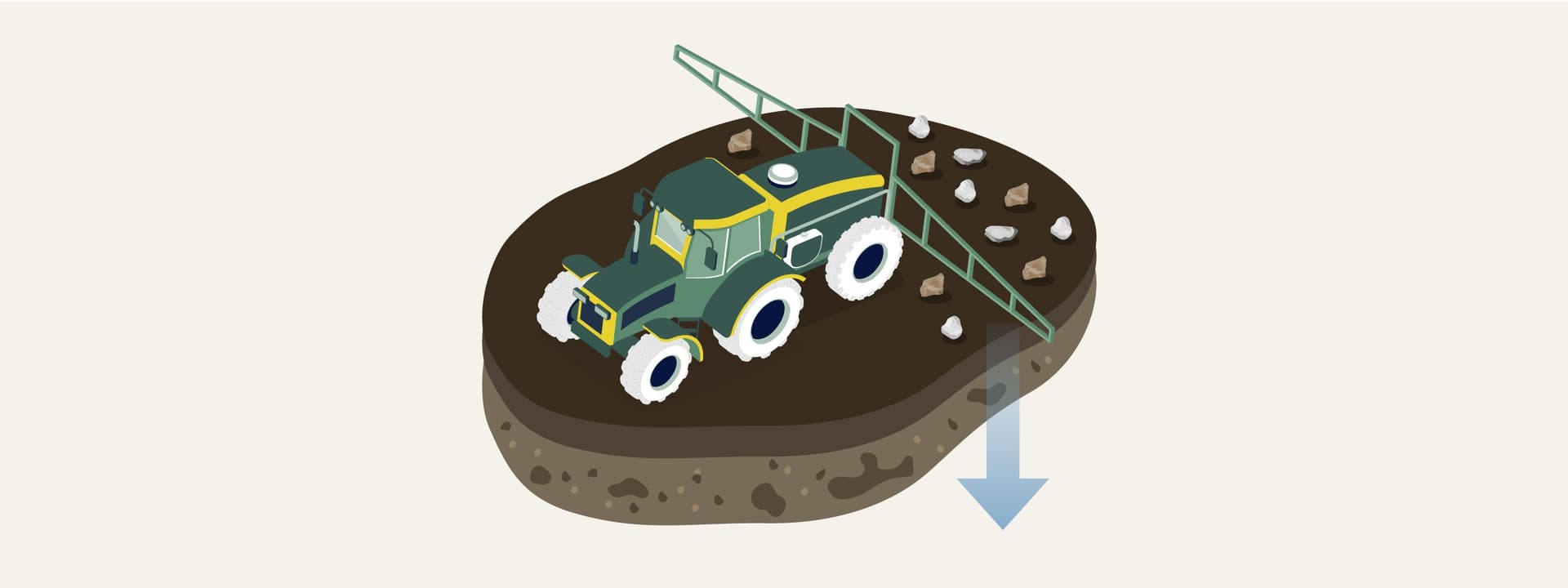
To accelerate this reaction, finely ground rock materials such as basalt, olivine or industrial by-products such as steel slag or concrete are used. By increasing the surface area, the process is significantly faster and more efficient when the material is spread on the ground and exposed to rain.
Once the crushed rock is spread over the land, it reacts with the CO₂ in the air and water to form dissolved bicarbonate ions. These ions slowly migrate through the soil and via watercourses into rivers and eventually into the oceans, where the bound carbon remains safely stored for thousands to tens of thousands of years. ERW also improves soil fertility, making the method a scalable and environmentally friendly approach.
Properties
- Location
- Country
- Sequestration mechanism
- Geochemical
- Carbon storage pool
- Minerals
Qualitative comparison
- Duration of storage
- high
- Potential
- medium-high
- Technology maturity
- low-medium
- Cost efficiency
- medium
- Co-benefits
- medium
"With our basalt flour, we can permanently store CO₂ from the atmosphere in the soil. When applied to the fields, the basalt meal also has fertilizing properties and therefore promotes plant growth."